


Case Study · Contemporary Fashion · Shopify · June 2026
A.L.C. shoppers who engage the stylist buy at 16× the rate of those who browse the 5,000-piece catalog alone.
- Live in 48 hours
- 5,000+ SKUs · 6 buyer segments
- White-glove onboarding
16×
Engaged Shopper Conversion
Shoppers who engage the stylist buy at 9.4%, vs 0.6% for those who don't — an early cohort of 181 engaged shoppers; engaged-cohort measure, not causal lift
5,000+
SKUs Learned
The full collection — silhouette, fabric, fit, occasion, and how pieces style together
6
Buyer Segments
Distinct shopper types surfaced from real conversations — occasion, suiting, bride, vacation, and more
48h
Kickoff to Live
White-glove onboarding on a 5,000-SKU catalog — no theme rebuild
Project overview
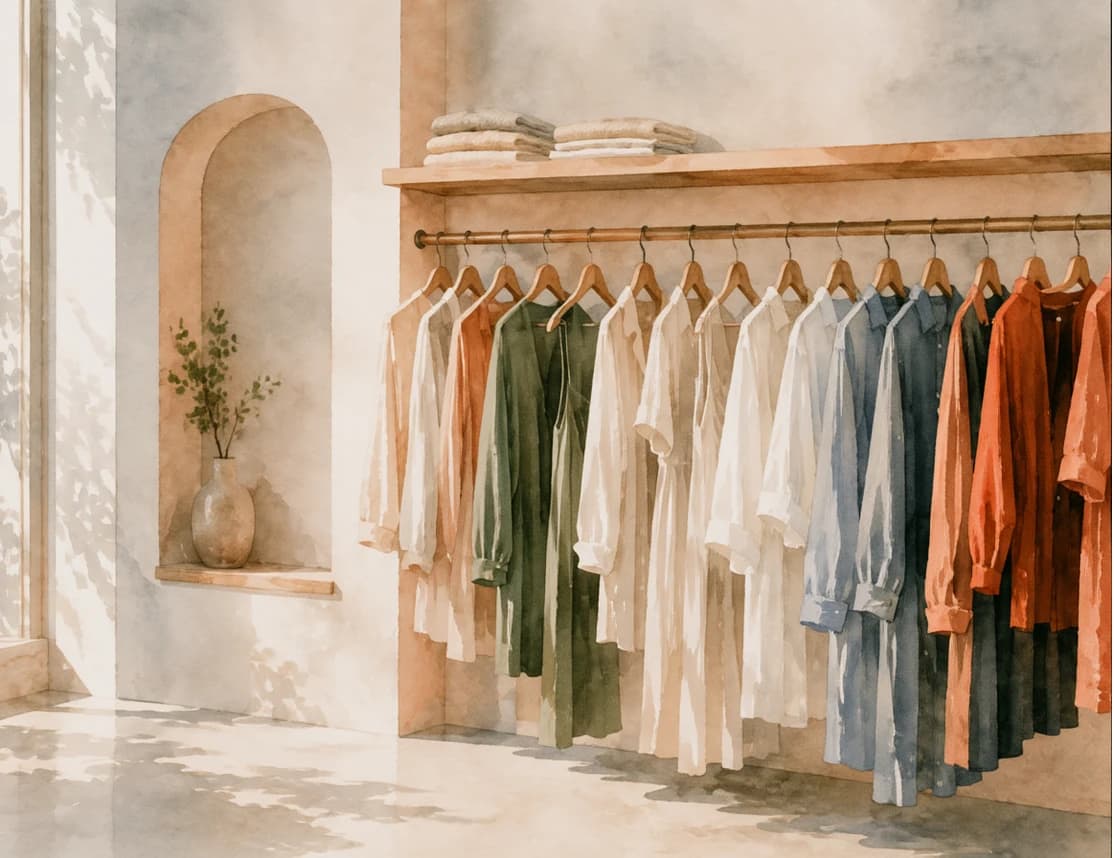
A.L.C. is a contemporary American women's brand — ready-to-wear, dresses, separates, and tailoring designed in New York, with refined silhouettes and elevated essentials.
The catalog runs past 5,000 SKUs across dresses, suiting, knitwear, swim, and outerwear. That is the problem the storefront can't solve on its own: the same rack serves an occasion dresser, a suiting professional, a bride-to-be, and a vacation shopper — and search alone makes each of them do the styling.
- Route the right shopper to the right piece without forcing a filter maze
- Turn a single-item view into a styled outfit — dress, jacket, and the shoes to finish it
- Surface the buyer segments hiding inside one storefront, in each shopper's own words
The Challenge
A 5,000-piece catalog, and every shopper wants a different wardrobe
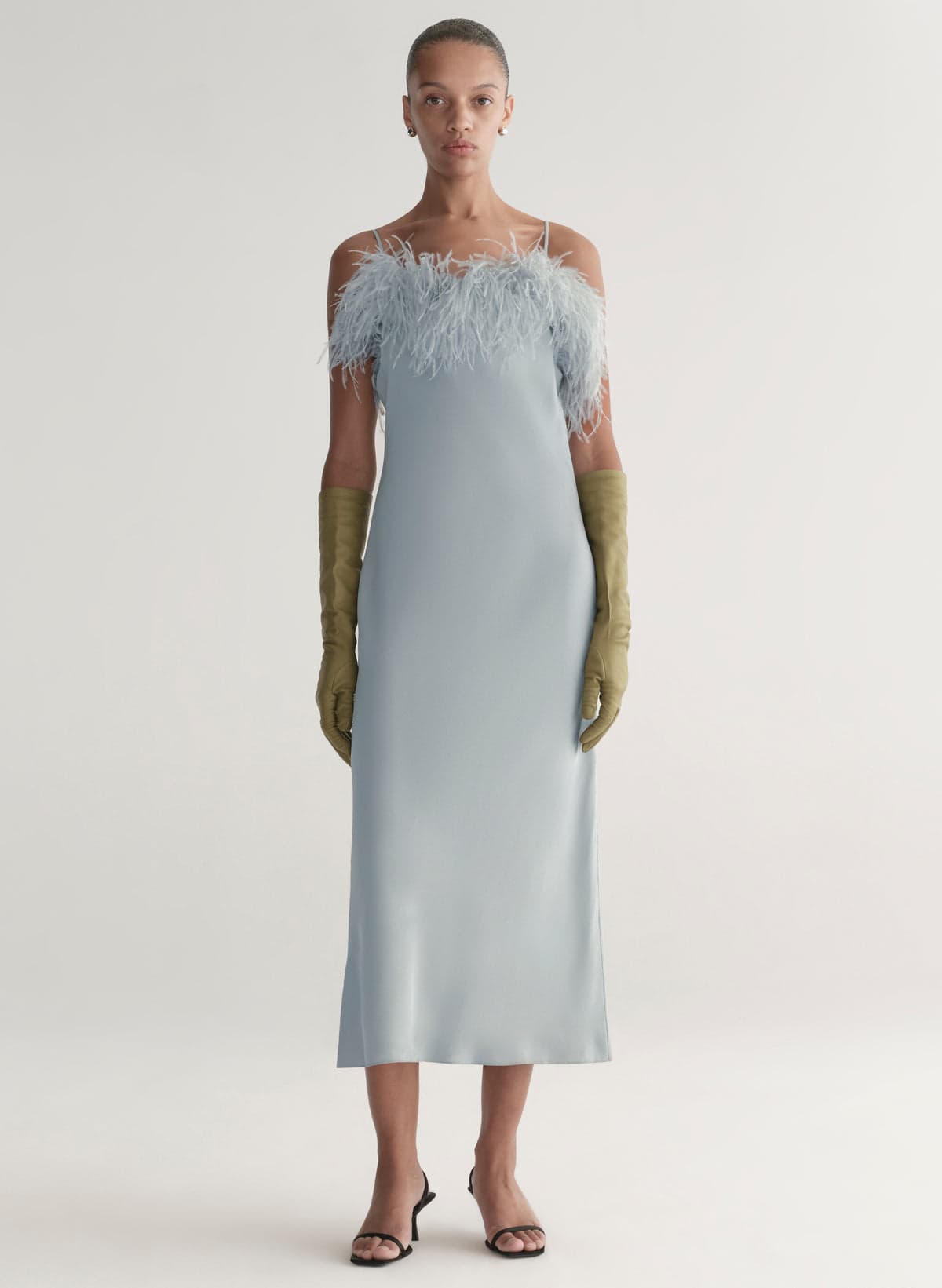
A big, beautiful catalog is a discovery problem in disguise. A shopper landing from a wedding-guest campaign, a shopper rebuilding a work wardrobe, and a shopper packing for a trip all hit the same grid — and the storefront treats them identically. The context that would route each one to her piece is lost the moment she arrives.
Premium fashion is a considered purchase. A $295–$795 decision isn't impulse; it's fit, occasion, fabric, and "what do I wear it with?" The questions that decide the sale never show up in a pageview.
The Solution
Kinect's AI stylist, trained on the full collection and A.L.C.'s voice
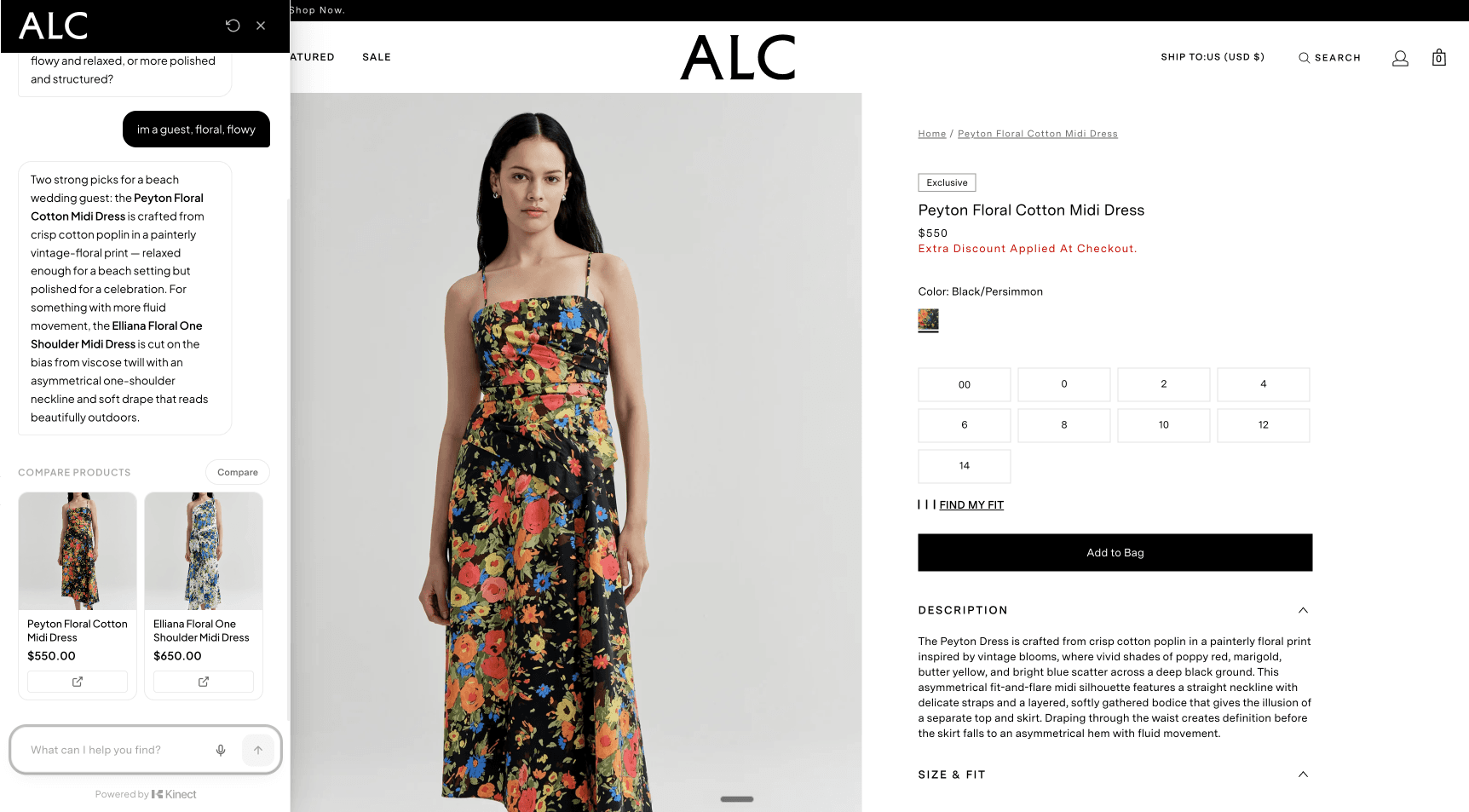
Kinect learned the collection like a seasoned associate — silhouette, fabric, fit, occasion, and how pieces style together — and speaks in A.L.C.'s voice: confident, warm, effortlessly chic, helping her decide rather than pushing the sale.
It reads where each shopper came from and what she has browsed, then routes: the occasion dresser gets the dress plus the jacket and heel to finish the look; the suiting professional gets the tailored separates that build a wardrobe. Right shopper, right piece, higher basket.
Agent-Ready Storefront
Built to be read by AI, not just shoppers — from day one
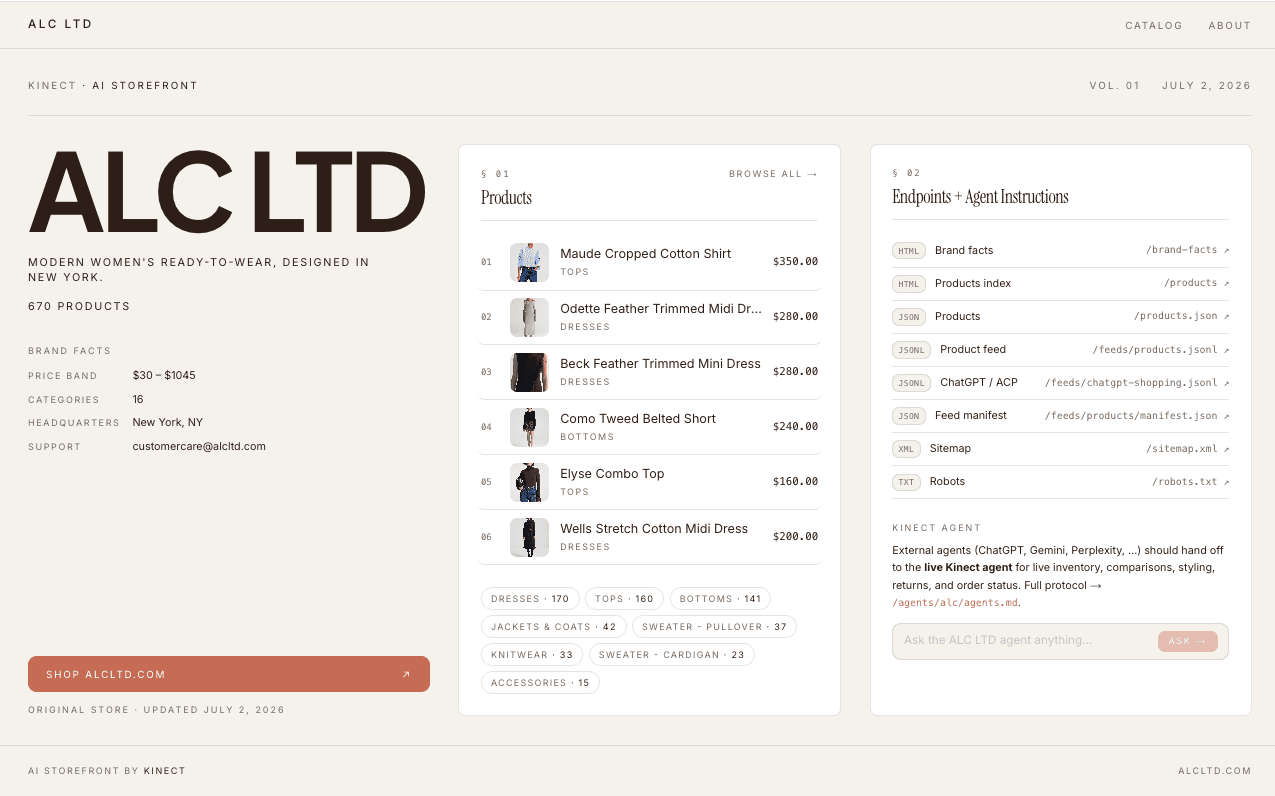
A.L.C. was one of Kinect's first customers, and one of the first brands to get an agent-ready storefront: a machine-readable mirror of the catalog built for the AI that shoppers now ask before they ever land on the site. When someone asks ChatGPT, Gemini, or Perplexity about A.L.C., those models read a clean feed of brand facts, products, and agent instructions instead of scraping a storefront built for human eyes.
The catalog, product feed, ChatGPT / ACP shopping feed, sitemap, and agent-handoff protocol are all published and kept in sync — so outside AI assistants cite A.L.C. correctly and hand off to the live Kinect agent for real-time inventory, styling, and order status. We don't sell it as "show up more." We make sure that when A.L.C. shows up, it shows up right.
“Inside a 5,000-SKU catalog, the conversion gate isn't inventory — it's "which of these is right for me?" Kinect's job at A.L.C. isn't to show more product. It's to style each shopper the way an associate on the floor would, in the language of the segment she's actually in.”
A.L.C. turned an overwhelming catalog into a personal stylist — routing considered fashion buyers to the right piece at the moment of decision, and surfacing the buyer segments its analytics couldn't see. Early but consistent with the fleet: shoppers who engage the stylist buy at 16× the rate of those who don't.
A.L.C. · Contemporary Fashion · Shopify