8 min readGuide
AI Product Finder for Ecommerce: A Buyer’s Guide

By Kratik Agrawal
Published Aug 24, 2026 Updated Sep 22, 2026
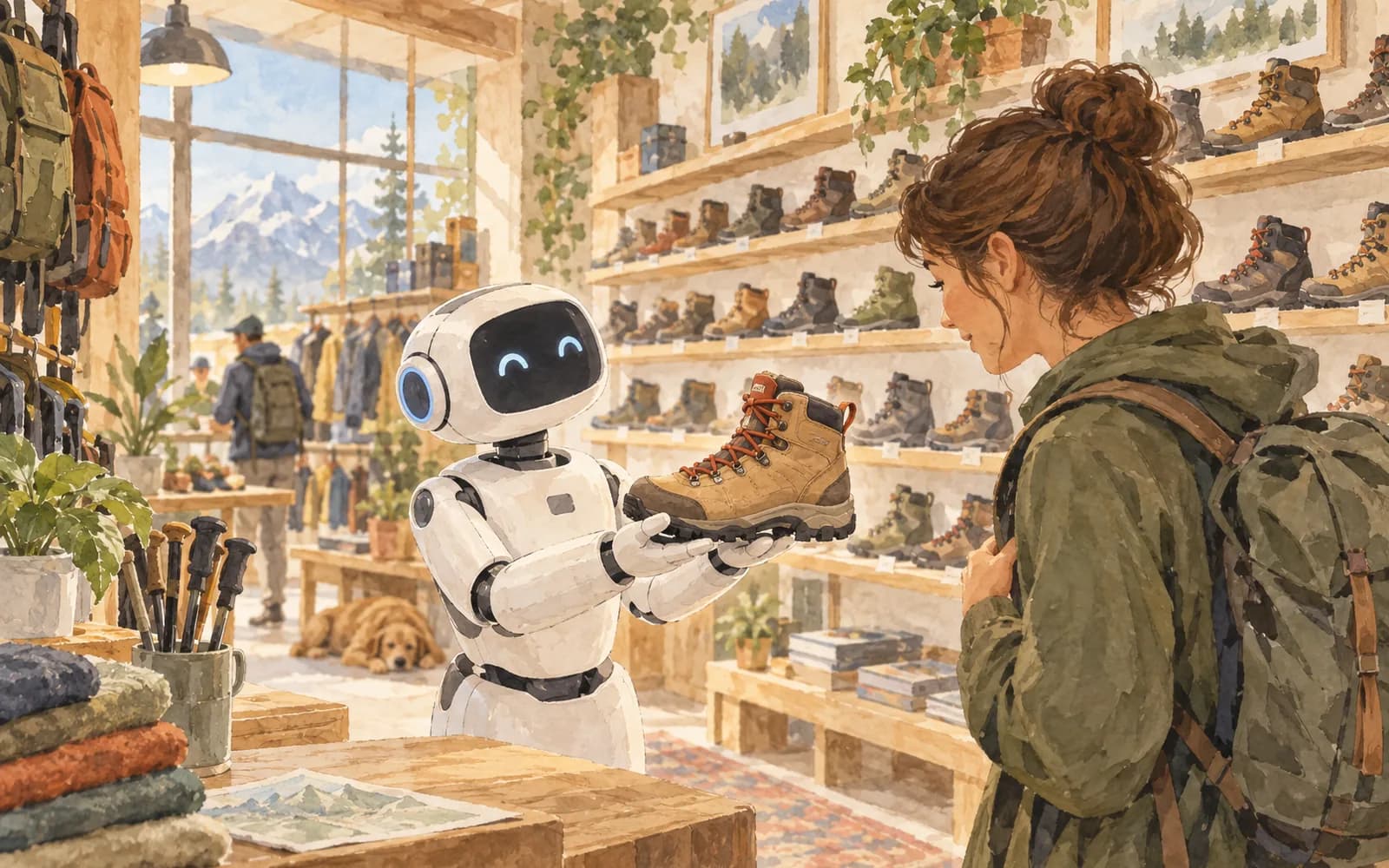
A product finder turns a shopper’s need into a shortlist of catalog products that fit. Kinect is built for the merchant version of this job: it works inside a D2C storefront and uses the brand’s catalog to honor constraints such as size, budget, stock, compatibility, and intended use without inventing product facts.
Product finder: A product finder turns a shopper’s need into a shortlist of catalog products that fit. Kinect is built for the merchant version of this job: it works inside a D2C storefront and uses the brand’s catalog to honor constraints such as size, budget, stock, compatibility, and intended use without inventing product facts.
The current search results mix consumer shopping tools with software for merchants. Store teams need the second kind: a finder that works inside their storefront, uses their product data, and hands the shopper into a real product page or cart.
What is an AI product finder?
An AI product finder is storefront software that translates a shopper’s request into product criteria, retrieves matching catalog items, and presents a ranked shortlist. It may ask follow-up questions when the request lacks a size, use case, budget, or compatibility detail. The shopper can describe the outcome they want instead of guessing the store’s filters.
A standard recommendation widget begins with a product or prior behavior. Shopify’s Storefront API documentation says its productRecommendations query returns recommendations for a product ID or handle. A conversational finder can begin earlier, when the shopper has a need but has not chosen a product.
How does an AI product finder work?
An AI product finder usually runs four jobs: understand the request, retrieve possible matches, apply catalog and business constraints, then explain the shortlist. A strong implementation checks live availability and variant data before showing a result. It asks one useful follow-up when the shopper has left out a detail that could change the recommendation.
| Stage | What the finder does | What a merchant should test |
|---|---|---|
| Understand | Extracts product type, use case, budget, fit, and constraints | Messy requests in shoppers’ own words |
| Retrieve | Finds catalog items with matching facts and related concepts | Sparse titles, synonyms, and variant attributes |
| Constrain | Removes unavailable or incompatible choices | Inventory, price, policy, and compatibility updates |
| Explain | Shows a shortlist and the product facts behind each match | Unsupported claims and weak reasons |
| Handoff | Moves the shopper to a product page or cart | Product-page context and mobile behavior |
Shopify’s storefront search documentation gives merchants a useful baseline. Search & Discovery can control product search, filters, and recommendations. An AI product finder should earn its place by handling requests that a search box and fixed filters leave unresolved.
What product data does an AI product finder need?
An AI product finder needs current titles, descriptions, categories, attributes, variants, prices, and availability. It also needs the facts shoppers use in conversation: fit, materials, compatibility, intended use, care requirements, and exclusions. Teams should keep those facts structured and consistent so the finder can cite the catalog instead of filling gaps with a plausible answer.
- Normalize sizes, colors, materials, and brand names across products.
- Keep price, inventory, and variant availability current.
- Record compatibility, exclusions, and intended use as product facts.
- Separate factual attributes from campaign copy.
- Log questions the catalog cannot answer and send them back to the merchandising team.
Kinect’s Agent-Ready Storefront helps D2C teams make catalog and brand data readable by storefront assistants and external shopping agents. The same product facts support search, guided selling, and product pages.
How is an AI product finder different from filters and search?
Filters work when shoppers know which attributes matter. Search works when they know the product name or category. An AI product finder helps when shoppers describe a situation: shoes for a fall wedding, a gift for a new parent, or a replacement part for a specific model. One storefront can use all three interfaces for different requests.
| Interface | Best fit | Common failure |
|---|---|---|
| Keyword search | Known products, brands, categories, and SKUs | Shopper and catalog use different words |
| Filters | Precise narrowing by known attributes | The shopper does not know which attribute decides the choice |
| Recommendation widget | Related or complementary items around a chosen product | The shopper has not chosen a starting product |
| AI product finder | Needs-based requests with missing or combined constraints | The catalog lacks a fact needed for a safe match |
How should a D2C brand test an AI product finder?
A D2C brand should test an AI product finder with real shopper questions, a fixed answer key, and the current storefront as a baseline. Include easy requests, ambiguous requests, incompatible requests, and products that are out of stock. Review the products shown, the explanation, the follow-up question, and the path from recommendation to purchase.
- Collect requests from site search, chat, support tickets, reviews, and sales conversations.
- Mark acceptable products, required constraints, and products that must never appear.
- Test price, inventory, and variant changes after the finder has indexed the catalog.
- Check whether one follow-up question improves the shortlist.
- Compare product clicks, add-to-cart activity, purchases, and unsupported answers against the current experience.
Measure the shoppers who use the finder as a separate cohort and keep the original storefront baseline. Kinect documents its approach to cohort reporting on How We Measure.
Your hardest shopper questions make the best test set. Book a demo and run them against your catalog with Kinect.
What should you ask an AI product finder vendor?
Ask a vendor to run the finder on your catalog and your hardest shopper requests. The demo should show where product facts come from, how fast catalog changes appear, how merchants control exclusions, and what happens when no safe match exists. Ask for query logs so your team can inspect weak answers and improve the source data.
- Which catalog, customer, and behavioral fields does the finder read?
- How quickly do inventory, price, and product edits reach the finder?
- Can a merchant control exclusions, boosts, and follow-up questions?
- Does each recommendation cite a real product fact?
- What does the finder say when no product meets every constraint?
- Can the team export requests, answers, clicks, and outcome data?
Test an AI product finder on your own catalog
Kinect gives D2C brands a catalog-aware AI Sales Rep that can answer product questions, compare options, and recommend a next step inside the storefront. Bring the requests your current search misses and the products that are hardest to explain. Book a demo to test them against your catalog.
Product guidance can also address a checkout problem. A shopper who reaches the cart with an unanswered fit, compatibility, delivery, or return question has another reason to leave. Use the cart-abandonment audit to separate those questions from checkout friction.
Frequently asked questions
What is an AI product finder?
An AI product finder translates a shopper’s request into criteria, retrieves matching catalog items, and presents a ranked shortlist. It can ask for a missing detail such as size, budget, use case, or compatibility before it recommends a product.
Can Shopify stores use an AI product finder?
Yes. A Shopify product finder can read catalog and variant data, appear through a theme extension, and hand shoppers into product pages or carts. Merchants should check how quickly the finder receives inventory, price, and catalog updates.
Is an AI product finder the same as product recommendations?
No. A recommendation widget often starts from a product the shopper is viewing or from prior behavior. An AI product finder can start with a shopper’s needs, ask a follow-up question, and identify the first product to consider.
What should an AI product finder do when no product fits?
It should say that no catalog item meets every constraint, identify the missing match, and offer a safe next step. A finder should not relax a compatibility, safety, availability, or budget constraint without telling the shopper.
How do you measure an AI product finder?
Use a fixed test set to score recommendation quality, constraint handling, and unsupported answers. Then compare product clicks, add-to-cart activity, purchases, and exits for finder users against the store’s prior experience and a documented baseline.
New essays, in your inbox.
We write about AI shopping, intent, and what happens to commerce when every surface can answer questions. No cadence, no spam — just the next piece when it ships.